Best Tools for Implementing AI Loyalty Programs Successfully
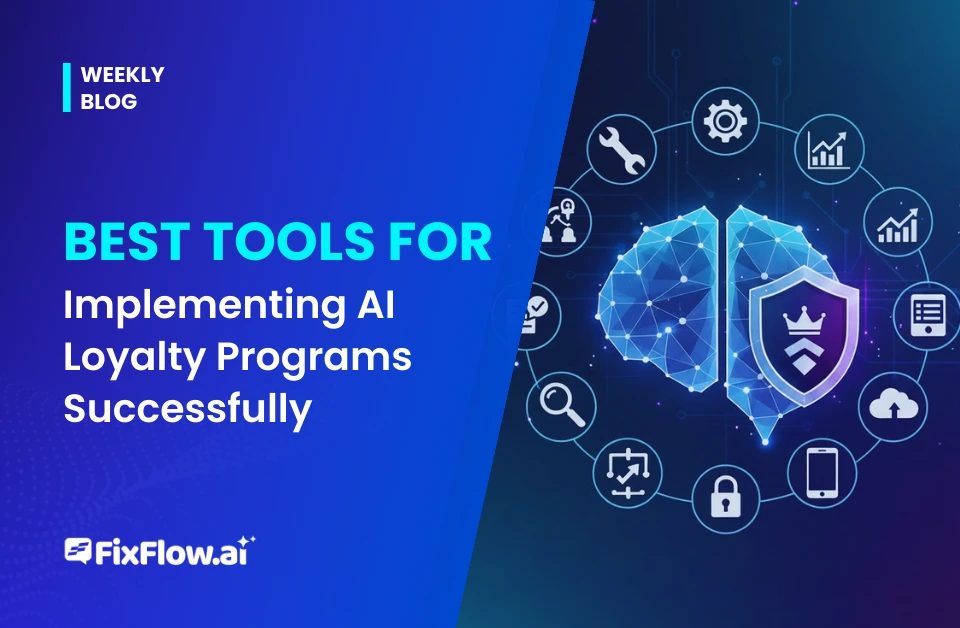
The most effective AI loyalty program tools include Customer Data Platforms (CDPs) for unified customer insights, predictive analytics engines for personalized rewards, and AI-powered recommendation systems for relevant offers. You’ll also need machine learning solutions for churn prevention and real-time decision engines for dynamic experiences. Together, these technologies create hyper-personalized loyalty programs that boost engagement and retention. The following breakdown reveals how each tool contributes to transforming traditional programs into intelligent customer loyalty machines.
Customer Data Platforms (CDPs) for Unified Loyalty Insights
Every successful AI-powered loyalty program begins with a strong customer data foundation. CDPs serve as the central nervous system of your loyalty strategy by creating unified customer profiles that combine purchase history, engagement patterns, and preferences from all touchpoints.
What makes CDPs essential is their ability to perform cross-channel data collection seamlessly, gathering interactions from your website, mobile app, in-store visits, and social media engagement. This 360-degree view enables you to understand exactly what drives loyalty for each customer segment.
With this thorough foundation in place, your AI tools can deliver truly personalized experiences rather than generic rewards. The best CDPs also safeguard data governance and compliance while making customer insights accessible to your marketing and loyalty teams.
Predictive Analytics Engines That Drive Personalized Rewards
Predictive analytics engines dig deep into customer behavior patterns to revolutionize how rewards are distributed. These powerful tools analyze historical purchasing data, engagement metrics, and demographic information to anticipate future customer actions with remarkable accuracy.
With predictive loyalty analytics, you’ll move beyond reactive reward systems to proactive ones that deliver offers before customers even realize they want them. The most sophisticated platforms excel at customer lifetime value forecasting, helping you identify which members deserve additional investment based on their projected long-term worth.
You’ll gain the ability to automate reward timing and relevance, ensuring offers arrive precisely when they’ll have maximum impact. This intelligence lets you allocate resources more efficiently while dramatically improving redemption rates and customer satisfaction across your entire loyalty ecosystem.
AI-Powered Recommendation Systems for Relevant Offers
Building on predictive analytics, modern recommendation engines represent the next evolution in loyalty personalization. These AI-powered rewards systems analyze past purchases, browsing behavior, and engagement patterns to suggest relevant offers that customers are most likely to value.
You’ll find that these recommendation engines can greatly boost redemption rates by presenting the right reward at the perfect moment. Leading AI personalization engines use collaborative filtering and deep learning to identify nuanced patterns in customer preferences that humans might miss.
When integrated with your existing loyalty platform, these systems continually learn and improve their suggestions based on customer responses. The most effective tools offer cross-category recommendations that introduce members to new product lines while maintaining relevance to their established preferences.
Machine Learning Solutions for Churn Prevention and Retention
While traditional loyalty programs react to customer departures, machine learning models can anticipate them before they happen. These predictive systems analyze behavioral patterns and engagement metrics to identify at-risk customers before they disengage.
Leading solutions like Retention Science and Amplero use churn prediction and retention modeling to detect early warning signals, allowing you to deploy targeted interventions. You’ll be able to identify which customers are worth saving through customer lifetime value forecasting, ensuring your retention budget is allocated efficiently.
What makes these tools powerful is their ability to learn and improve continually. As they gather more data, their predictions become increasingly accurate, creating a virtuous cycle of better retention strategies and stronger customer relationships, ultimately transforming reactive loyalty programs into proactive retention engines.
Real-Time Decision Engines for Dynamic Loyalty Experiences
Real-time decision engines represent the next evolution in loyalty program intelligence. These systems leverage advanced real-time data processing to analyze customer interactions as they happen, allowing your program to respond instantly with relevant offers and rewards.
AI-powered loyalty platforms like Cheetah Digital and Merkle integrate decision engines that evaluate numerous variables simultaneously from purchase history to location data, enabling truly dynamic experiences. When a customer enters your store, browses your website, or abandons a cart, these engines immediately determine the best response.
What makes these tools particularly valuable is their ability to test multiple approaches and self-optimize based on results. This creates a loyalty program that continuously improves, delivering personalized experiences that feel intuitive rather than programmatic to your customers.
Frequently Asked Questions
How Much Technical Expertise Is Needed to Implement AI Loyalty Tools?
Implementing AI loyalty tools requires varying levels of technical expertise. You’ll need some understanding of data integration and analytics, but many platforms offer user-friendly interfaces that reduce technical barriers. Most solutions provide implementation support and training. Consider starting with no-code or low-code options if your technical resources are limited. The key is choosing tools that match your team’s capabilities while planning for proper training to guarantee successful adoption.
Can Small Businesses Afford AI Loyalty Program Technology?
Yes, small businesses can afford AI loyalty technology. You’ll find many platforms offering tiered pricing with affordable entry-level options. Start with simpler solutions like AI-enhanced CRM systems or marketing automation tools with loyalty features. Cloud-based subscription models eliminate large upfront investments. Many vendors also provide scalable solutions that grow with your business. The key is starting small, focusing on core features that deliver immediate ROI, and expanding as your program proves successful.
How Long Does It Typically Take to See ROI?
You’ll typically see initial ROI from AI loyalty programs within 6-12 months. Basic improvements like increased redemption rates may appear within 3 months, while deeper metrics like customer lifetime value growth take 12-24 months to materialize fully. For faster results, start with clear KPIs, implement phased rollouts, and continuously optimize. Remember, ROI accelerates as your AI collects more customer data and refines its personalization capabilities.
Are There Industry-Specific AI Loyalty Solutions Available?
Yes, there are industry-specific AI loyalty solutions available. You’ll find specialized platforms for retail, hospitality, financial services, and healthcare sectors. These tailored solutions address unique industry challenges with pre-built features like appointment-based rewards for salons or flight-based tiers for airlines. They often come with industry benchmarks and compliance frameworks built in, saving you implementation time while delivering higher relevance to your customers’ specific purchasing and engagement patterns.
How Do AI Loyalty Programs Impact Customer Data Privacy?
AI loyalty programs impact customer data privacy by requiring extensive data collection. You’ll need robust consent mechanisms and transparent privacy policies. While AI enables deeper personalization, it also increases privacy risks. Make sure your program complies with regulations like GDPR and CCPA. Consider using privacy-preserving AI techniques and anonymized data where possible. Remember that building customer trust through responsible data handling is essential for loyalty program success.