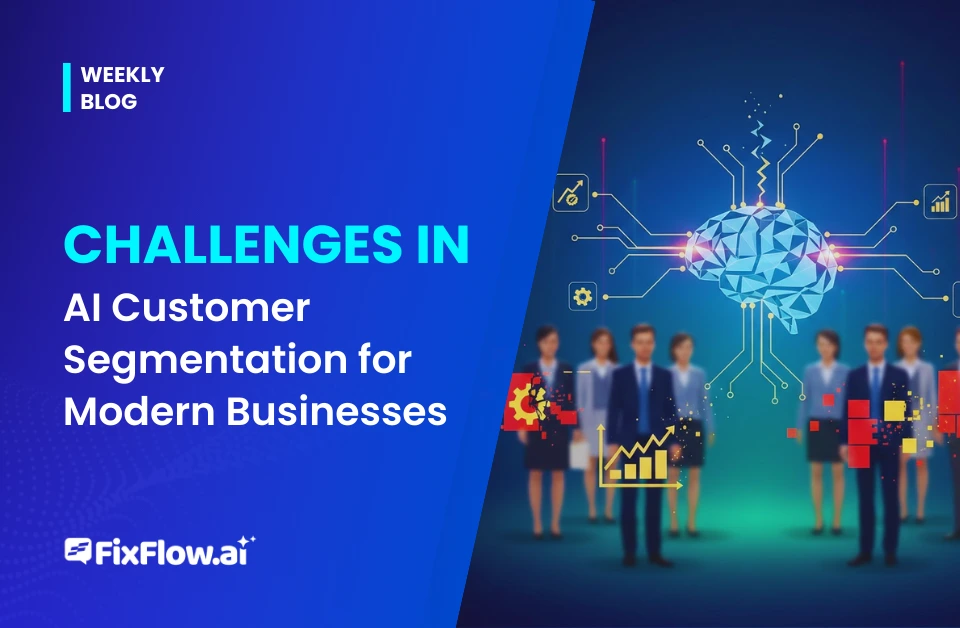
Challenges in AI Customer Segmentation for Modern Businesses
Modern businesses face five key challenges with AI customer segmentation: data quality issues where more data doesn’t guarantee better results, difficulty translating AI insights into marketing actions, complexities in making algorithms understandable to non-technical teams, traversing privacy regulations while personalizing experiences, and measuring true ROI beyond traditional metrics. You’ll need strategies that balance sophisticated AI capabilities with practical business applications to overcome these hurdles. The solutions ahead can transform how you understand and connect with your customers.
The Data Quality Paradox: When More Isn’t Always Better
Why do many businesses mistakenly believe that accumulating massive datasets automatically leads to better AI segmentation? It’s often the assumption that more data equals more accurate insights, but the reality is quite different.
The truth is, customer data complexity increases exponentially with volume. Your AI models don’t simply need more data; they need clean, relevant, and well-structured information. Poor quality data riddled with inconsistencies, duplications, and outdated information will undermine even the most sophisticated algorithms.
You’ll find that focused datasets with high-quality attributes often outperform massive but messy collections. Data quality in AI models depends more on relevance and accuracy than sheer quantity. The key is curating your customer information thoughtfully, not just collecting it indiscriminately.
Bridging the Gap Between AI Insights and Marketing Execution
Having high-quality data is just the starting point; the real challenge emerges in translating AI’s customer segmentation insights into effective marketing strategies. You’ll often find yourself with sophisticated segments but struggle to implement targeted campaigns that align with these insights.
Watch for AI bias in segmentation that can skew your understanding of customer groups. When your AI models favor certain demographics while underrepresenting others, your marketing execution will inherently perpetuate these biases.
Implementing ethical AI in marketing requires transparency about how you’re using customer data to inform decisions. You’ll need cross-functional teams where data scientists explain insights to marketers in accessible terms. Consider creating visualization dashboards that bridge technical complexity and actionable marketing tactics, ensuring your brilliant AI insights don’t remain trapped in analytics platforms.
Translating Complex Algorithms Into Actionable Business Strategies
The complexity of AI segmentation algorithms creates a significant barrier for business teams trying to implement their insights. You’ll often find that technical outputs from your data science teams don’t easily translate into marketing language or sales strategies that frontline teams can execute.
These data-related challenges emerge when trying to connect algorithmic findings with practical campaign tactics. Even when your AI models produce accurate segments, you’re faced with algorithmic and model challenges in explaining what these segments actually mean for your business. Without clear interpretation, you can’t develop targeted messaging or product features that resonate with each segment.
To bridge this gap, you’ll need simplified dashboards and training programs that help non-technical teams understand and apply AI insights to their daily decisions.
Navigating Privacy Regulations in the Age of Personalization
As global privacy regulations like GDPR and CCPA continue to reshape data practices, you’re facing a fundamental tension between personalization demands and compliance requirements. Your AI customer segmentation strategies must now balance depth of insight with strict legal boundaries.
Among the primary customer data segmentation challenges is implementing proper consent management systems that track permissions across all touchpoints. You’ll need to adopt privacy-by-design principles, ensuring your AI models can function effectively even with limited data access.
Customer privacy and consent management isn’t just about avoiding penalties; it’s about building trust. Consider implementing differential privacy techniques and anonymization protocols that allow meaningful segmentation while protecting individual identities. This balanced approach helps maintain personalization capabilities while demonstrating respect for customer boundaries.
Measuring ROI: Beyond Traditional Metrics for AI Segmentation Success
While privacy compliance establishes the guardrails for your AI segmentation efforts, determining whether these initiatives actually drive business value requires sophisticated measurement approaches. You’ll need to look beyond conventional metrics like conversion rates and campaign performance.
Consider tracking how real-time customer analytics impact customer lifetime value and retention rates over extended periods. Measure improvements in cross-selling effectiveness when your segments evolve dynamically rather than remaining static. Don’t overlook predictive customer modeling risks, including the cost of false positives (targeting unprofitable segments) and false negatives (missing high-value opportunities).
The true ROI of AI segmentation emerges when you quantify both immediate campaign performance and long-term relationship improvements, factoring in implementation costs, ongoing maintenance, and the strategic advantage gained from deeper customer understanding.
Frequently Asked Questions
How Can AI Segmentation Adapt to Seasonal Customer Behavior Changes?
To adapt AI segmentation to seasonal behavior changes, you’ll need time-series models that recognize cyclical patterns. Incorporate historical seasonal data and implement rolling window analysis to detect shifting trends. You can use ensemble methods that combine multiple models for greater adaptability. Don’t forget to regularly retrain your algorithms with fresh data and establish automatic triggers that adjust segments when seasonal indicators appear. Always validate results against business knowledge of seasonal factors.
What Organizational Structure Best Supports AI Customer Segmentation Initiatives?
You’ll want a cross-functional team structure for AI customer segmentation success. Ideally, establish a core data science team that collaborates closely with marketing, sales, and IT departments. Create a dedicated “Center of Excellence” with clear leadership and guarantee executive sponsorship. Don’t forget to implement agile methodologies to adapt your segmentation models quickly. This hybrid approach balances specialized AI expertise with business domain knowledge for ideal results.
Can AI Segmentation Work Effectively for B2B and Niche Markets?
Yes, AI segmentation can work effectively for B2B and niche markets. You’ll need to adapt your approach by focusing on different metrics like company size, industry, decision-making structure, and purchase history. While you’ll face challenges with smaller data sets, AI can still uncover valuable patterns by incorporating qualitative data and industry-specific variables. You’ll get the best results by combining AI insights with your team’s domain expertise about your specific market.
How Frequently Should AI Segmentation Models Be Retrained?
You should retrain your AI segmentation models quarterly at a minimum, but the ideal frequency depends on your business dynamics. If you’re in a fast-changing market, monthly updates may be necessary. Watch for performance degradation, significant market changes, or seasonal shifts as triggers for retraining. Establish monitoring metrics and don’t wait for models to fail before renewing them with new data patterns.
What Integration Challenges Exist Between AI Segmentation and Legacy CRM Systems?
You’ll face several integration hurdles when connecting AI segmentation with legacy CRM systems. Data format inconsistencies, limited API capabilities, and outdated architecture in older CRMs create technical barriers. You’re also likely to encounter incomplete customer profiles, batch processing limitations that hinder real-time analysis, and resistance from teams comfortable with existing workflows. These challenges often require middleware solutions or custom connectors to bridge the gap between modern AI capabilities and established systems.